Will a Cold Frame Work in Zone 6 or 7? What Survives Below 10°F
Does a cold frame work in winter? In zones 6 and 7 it can keep spinach, kale and mache harvestable through most of winter. What to grow and how to set it up.
by Joyce ·
quilt on the worst nights
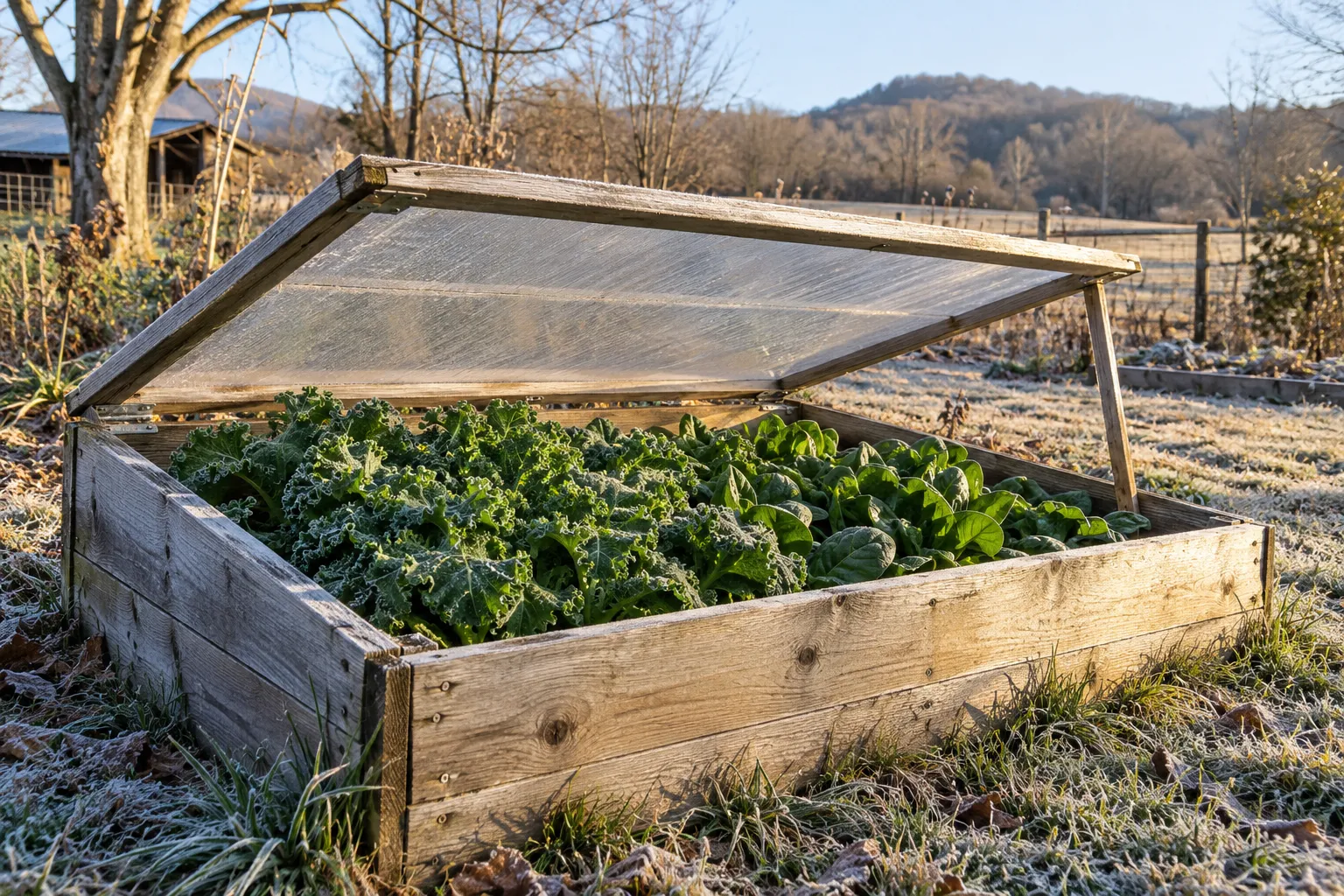
Does a cold frame work in winter? Yes. In zones 6 and 7 a cold frame can keep hardy greens like spinach, kale and mache harvestable through most of the winter. One gardener in southern Ohio reported harvests down to about 10°F once he added a layer of frost cloth inside the frame. Grow your crops to full size by late fall, then let the frame hold them.
What a cold frame does and what it can't doprop the lid on sunny days
A cold frame traps daytime heat and blocks wind. University of Missouri Extension says the air inside generally runs no more than 5 to 10 degrees above the outside temperature, and UVM Extension gives the same 5 to 10 degree range. Missouri adds that a mat or blanket over the frame on cold nights adds only a few degrees more, but a few degrees can matter.
A cold frame can't add daylight. Your plants still slow down when the days drop under about 10 hours, so the frame works more like a refrigerator than a greenhouse in December and January.
Real-world results from southern Ohio
The Ohio thread I keep going back to dates from December 2025, so it's last winter's report. The grower kept picking greens until temperatures fell to about 10°F, using an inner cover cloth draped over the plants inside the frame. Below that, the plants held but he stopped harvesting.
Crops that grow vs. crops that only holdquilt on the worst nights
Keep growing on mild days: mache, spinach, claytonia.
Hold well for picking: kale, collards, scallions, carrots.
Struggle: lettuce once nights get hard, and anything frost-tender.
from the garden, this year
Getting more out of your frame
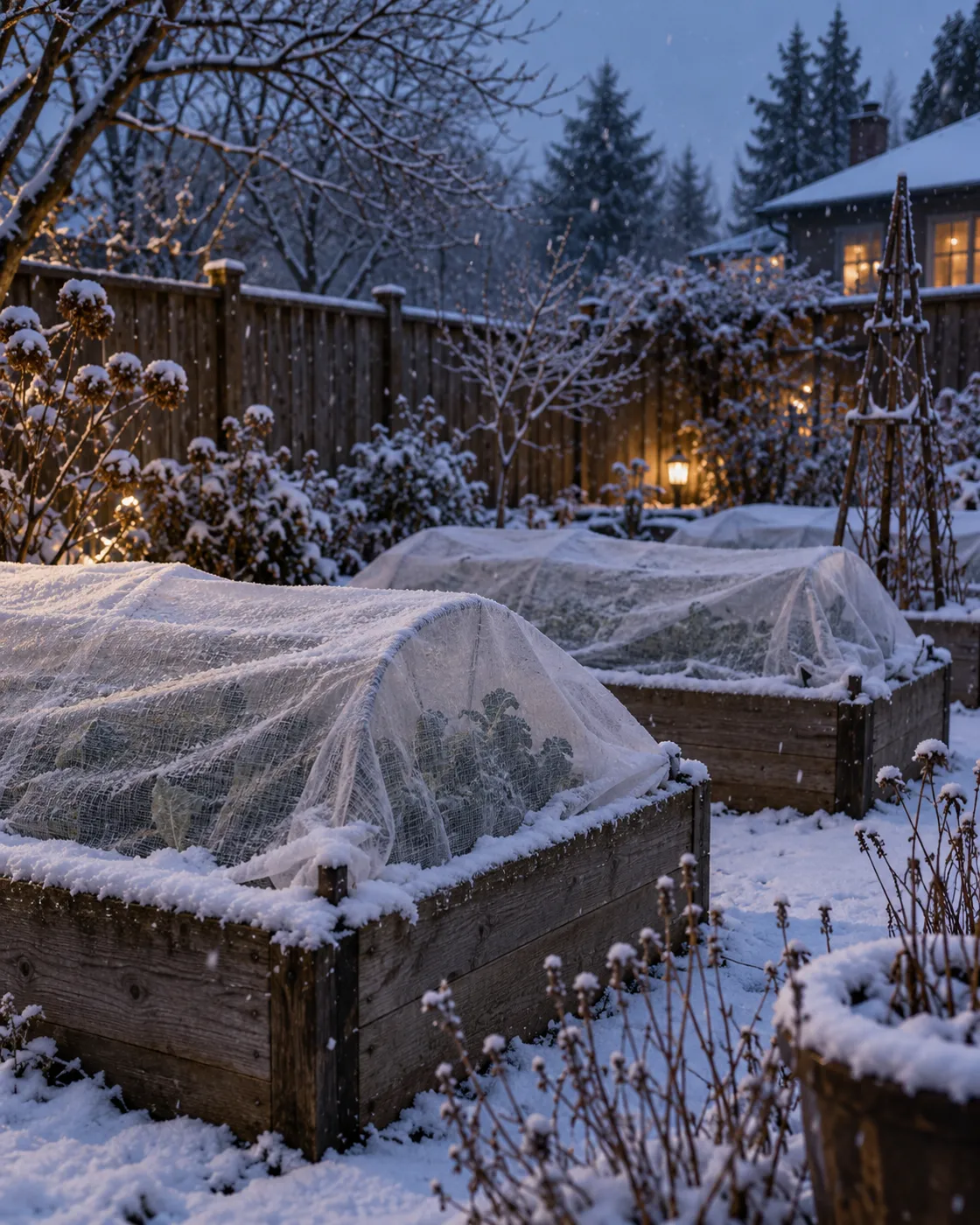
Add an inner cover. A layer of frost cloth inside the frame made the biggest difference in the Ohio report.
Add thermal mass. A few dark jugs of water soak up sun and give it back at night.
Face it south. Put the frame where it gets the most winter sun.
Insulate on the worst nights. I throw an old quilt over the lid when the forecast drops into the teens. Missouri Extension recommends mats or straw over the sash in extreme cold, removed once the weather clears.
Vent on sunny days. A closed frame can overheat fast on a bright afternoon. I prop the lid a few inches whenever the sun is out and the air sits above freezing, then close it in late afternoon, as Missouri Extension advises, to hold the heat for the night. For what to sow in your frame and when, see my fall greens timing guide and my succession sowing plan.
Colder zones (4 and 5)
In zones 4 and 5 a plain cold frame often isn't enough by January. A manure hot bed under the frame adds bottom heat, a second cover adds a few degrees, and a high tunnel gives you room to stack both.
Build or buy
You can build one from scrap lumber and an old storm window in an afternoon. Twin-wall polycarbonate won't shatter, which matters in a busy yard. Kits run from small plastic boxes to cedar frames with automatic openers. Size it so you can reach the back without stepping in.
Gardeners report harvests down to about 10°F with an inner cover cloth. Hardy greens can survive colder than that, but they stop growing.
Do I need to vent a cold frame on sunny winter days?
Yes. Prop the lid open a few inches on sunny days above freezing so the plants don't overheat.
Glass or polycarbonate?
Polycarbonate won't break. Glass costs nothing if you reuse an old window. Either works; Missouri Extension's guide covers both glass sash and plastic covers.
Does a cold frame help in cloudy Pacific Northwest winters?
It helps with wind and rain, and it keeps greens cleaner. It can't make up for short, dark days, so plant early.